We're excited to share some big updates that push BrilliantCode to a new level: two new frontier models and a state-of-the-art context compacting system that lets you work on long, complex projects without performance degradation.
In this update:
- GPT-5.1-Codex-Max – the latest frontier coding model from OpenAI
- Opus 4.5 – Anthropic’s new frontier model with strong coding and general intelligence
- Context compaction: work for hours in the same session and keep your context clear and focused
GPT-5.1-Codex-Max: next-gen coding power
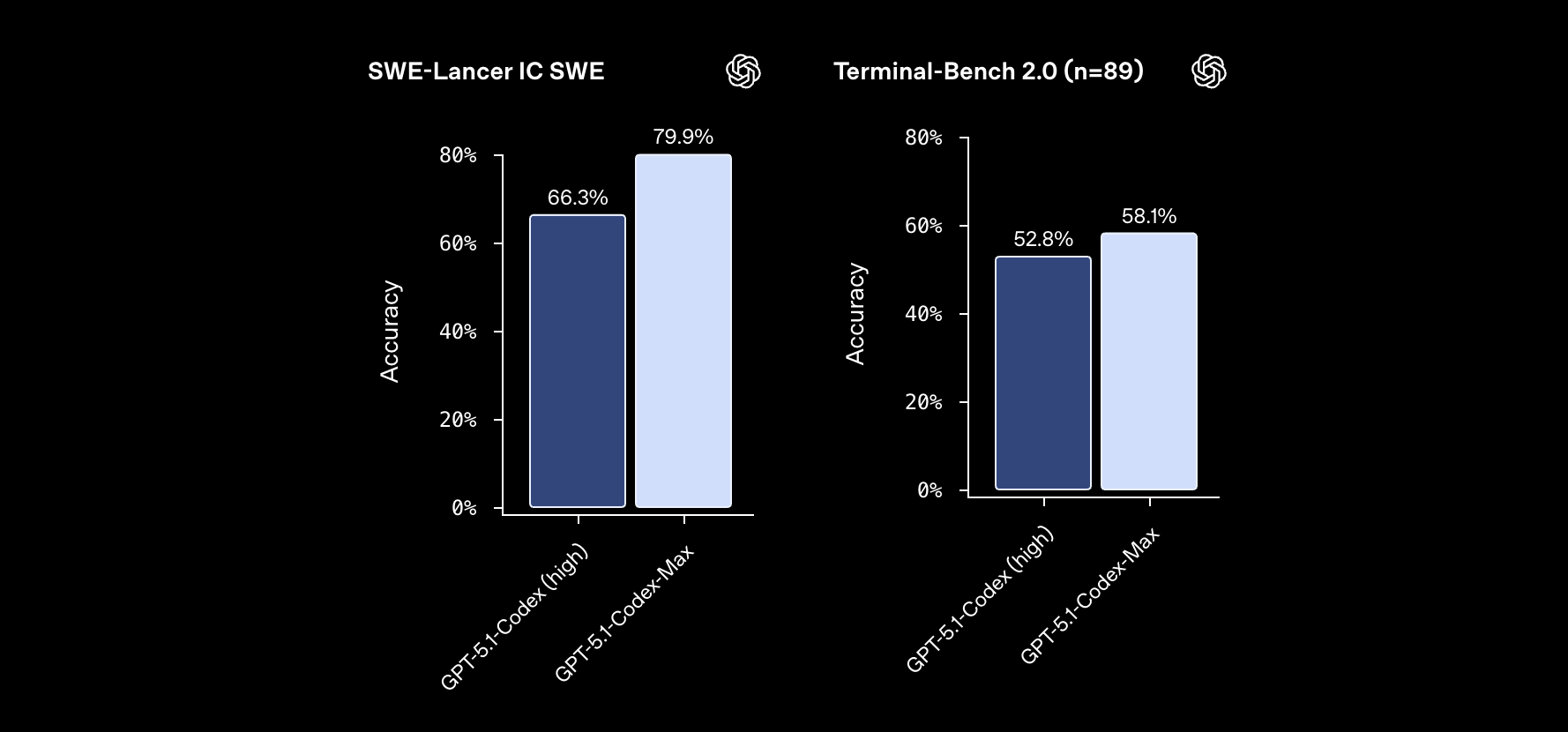
If you’ve used 5.1-Codex before, Codex-Max will feel familiar, but sharper. It performs better on coding benchmarks like SWE-Bench Verified, Terminal-Bench, and SWE-Lancer, but the real difference shows up in day-to-day work: it’s more stable on long-running tasks, better at reasoning over messy real-world repos, and more consistent when you ask it to stick to a plan over time.
Codex-Max really shines when you point it at large, unfamiliar codebases. It can walk through a monorepo with you, help you build a mental map of modules and services, and suggest safer refactors while explaining the impact in plain language. Instead of throwing random edits at your code, it behaves more like a senior engineer who has taken the time to understand the project first.
It’s also strong on long-running feature work. You can implement multi-step features end-to-end, move through the usual debug–fix–retest cycles, and it does a much better job of remembering earlier decisions in the same session.
For frontend development, Codex-Max is the model you reach for when you want rough ideas turned into clean, production-ready components, and it helps with styling, layout, and responsive behaviour.
If 5.1-Codex was already good for coding, Codex-Max is the upgraded version you’ll want to use by instead.
Opus 4.5: more than just a coder
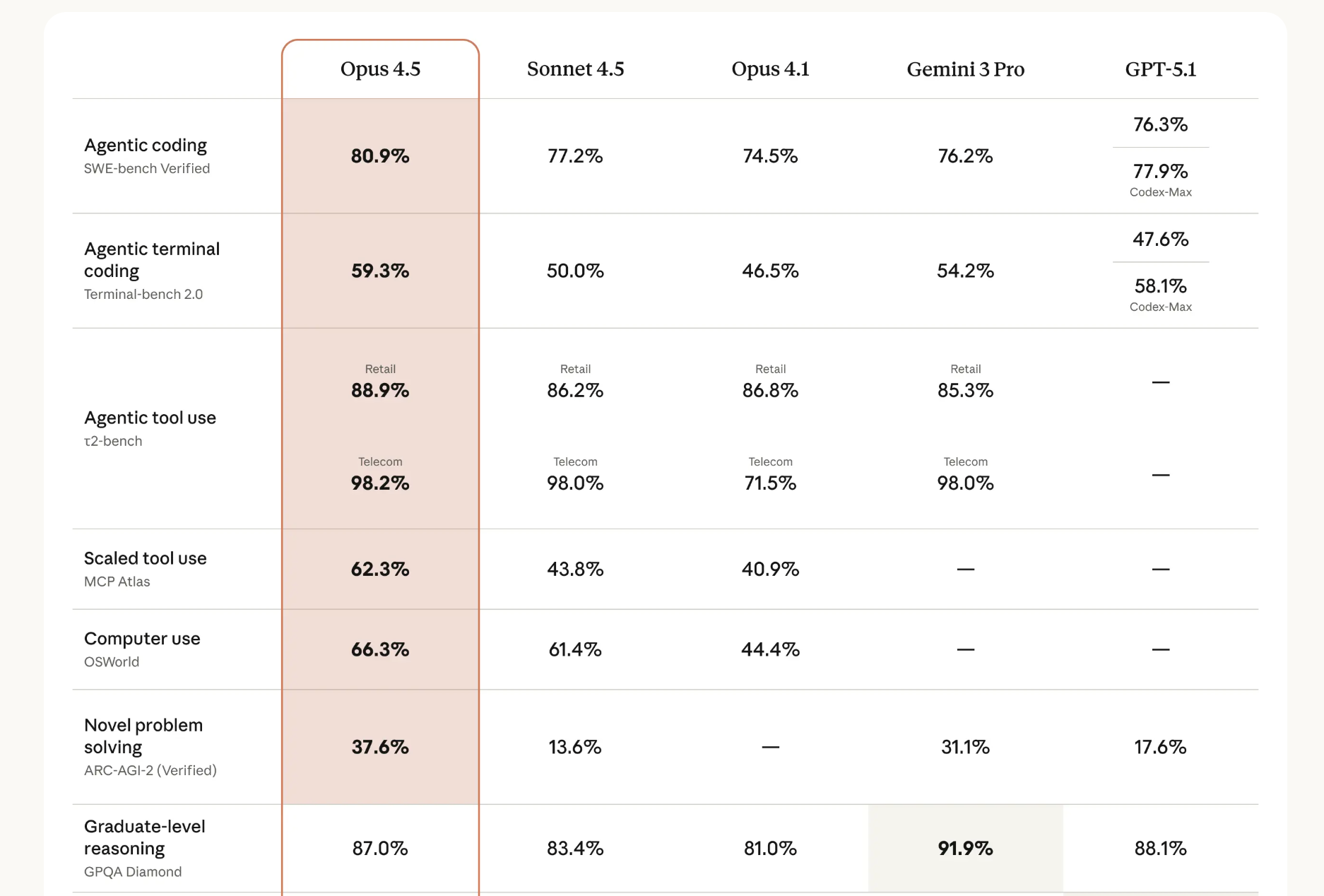
Opus 4.5 is not just “a coding model”. It’s a generally intelligent system that also happens to write excellent code. It ranks at the top of many benchmarks for agentic coding, tool use, computer use, and visual reasoning.
It’s great for visual understanding and web/UI work. You can show it a screenshot or describe a mockup, and it can help you translate a design system into real components and CSS. It’s also useful when you’re shaping the words around your product: writing microcopy for buttons and forms, drafting release notes and docs, or turning technical features into clear messaging your users will actually understand.
Beyond that, Opus 4.5 is strong at architecture and planning.
You can use it to sketch system designs, discuss trade-offs, and think through folder structures, service boundaries, and data models. It’s good at laying out step-by-step implementation plans for new features so you don’t feel overwhelmed.
And when it comes to documentation and developer experience, Opus 4.5 can generate API docs and comments from existing code, create examples and snippets for your libraries, and turn chaotic notes into structured READMEs or design documents.
If Codex-Max is the laser-focused engineer, Opus 4.5 is the smart co-founder you want next to you when you’re making decisions, designing UX, and zooming out to see the bigger picture.
Context compacting: work for longer without context rot
Even with powerful models, there’s still a hard limit: context length. There’s only so much conversation, code, and file content a model can “hold in mind” at once.
If you’ve ever worked in a huge repo, had a very long chat with your coding agent, or run multi-step refactors and feature builds, you’ve probably seen the symptoms of hitting that limit. The model starts forgetting things you said 200 messages ago. You feel forced to spin up a new chat because the old one has become too heavy. Responses get a bit confused or contradictory after a long session.
BrilliantCode now tackles this head-on with a new context compacting system.
Under the hood, BrilliantCode periodically summarises your long history in place. It keeps the important decisions, constraints, and design choices, and quietly drops low-value noise and repetition. This happens automatically as your session grows.
The result is that you can work for hours in the same session without everything falling apart. The model still remembers what you’re building and why. You can use BrilliantCode confidently on big, complex codebases and even multi-day tasks.
Try it now in BrilliantCode v1.2.7
All of these upgrades are live in BrilliantCode version 1.2.7.
You can switch between GPT-5.1-Codex-Max and Opus 4.5 depending on what you’re doing: laser-focused coding, or broader thinking and design. You can lean on context compacting to stay in the same session for longer, even when you’re working with large repos and complex features.
BrilliantCode is meant to be your always-on coding partner for real, production work.
👉 Download the latest version (v1.2.7), put it to work on a real project, and let us know how it feels. we're still improving BrilliantCode every single day, and your feedback directly shapes what we build next.
Happy coding!